
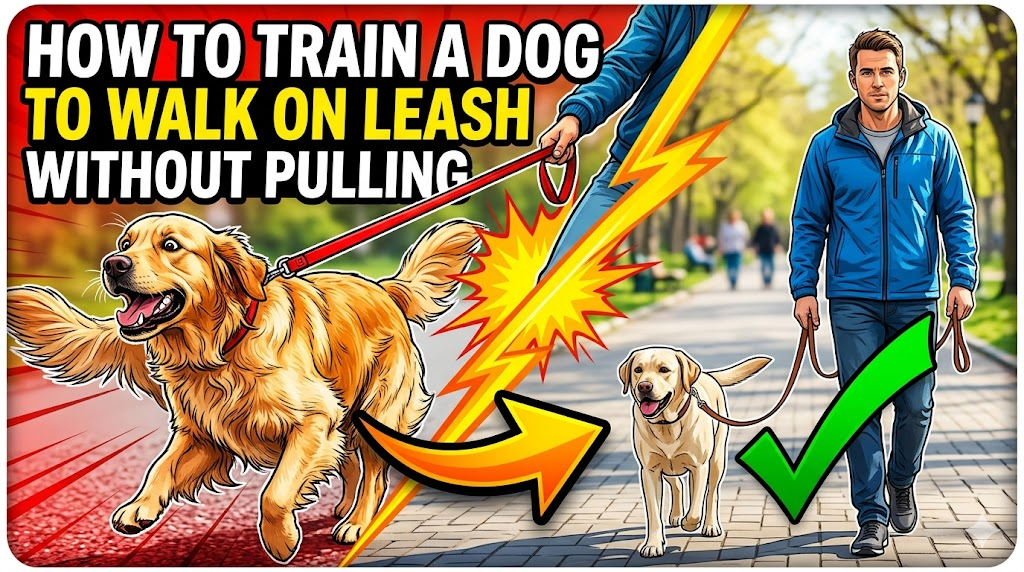
There is nothing quite like a peaceful walk with your canine companion. But if your daily strolls feel more like a high-intensity game of tug-of-war, you are not alone. Leash pulling is one of the most common behavioral challenges dog owners face. Whether you are working with an energetic new puppy, a stubborn rescue, or a powerful large breed, teaching your dog to walk calmly beside you is entirely achievable with the right strategy.
This comprehensive guide will break down step-by-step training methods to eliminate leash pulling, keep your dog focused by your side, and transform your daily walks.
The Core Concept: Why Do Dogs Pull?
Before diving into the mechanics of training, it is crucial to understand why your dog pulls. Dogs naturally move at a much faster pace than humans. To them, the great outdoors is a thrilling sensory playground filled with exciting smells, sights, and sounds.
When they pull and successfully reach that tree, bush, or fellow dog, they receive a reward for their behavior. In their mind, pulling = moving forward. To stop the pulling, we have to flip the script so they learn that a loose leash = moving forward.
How to Stop Leash Pulling Instantly (The 5-Minute Fix)
While true mastery takes time, you can drastically reduce pulling in just five minutes by introducing the “Be a Tree” technique. This method instantly communicates to your dog that tension on the leash achieves nothing.
- Stop Immediately: The second you feel the leash tighten, freeze in your tracks. Do not yank the leash back; simply hold your ground like an anchor.
- Wait for Slack: Remain completely still until your dog creates slack in the leash. This might happen because they turn around to look at you, sit down, or take a step backward.
- Reward and Move: The exact moment the leash goes loose, praise them enthusiastically (“Yes!”) or click your clicker, offer a high-value treat right at your hip, and begin walking again.
If you repeat this consistently for just five minutes, your dog will begin to connect the dots: Tight leash means all the fun stops. Loose leash means we keep moving.
Step-by-Step: How to Train a Dog to Walk on a Leash Next to You
To get your dog walking perfectly parallel to you (often called loose-leash walking or a casual “heel”), you need to make your side the most rewarding place on earth.
Step 1: Choose Your Side
Pick a side (usually the left) and stick to it consistently. Keep your leash short enough to control your dog but loose enough to form a visible “J” shape.
Step 2: Charge the “Sweet Spot”
Before even moving, stand still with your dog on your chosen side. Give them a treat right next to your thigh. Repeat this several times so they realize that standing next to your leg results in delicious rewards.
Step 3: Take One Step
Take a single step forward. If your dog steps forward with you without rushing ahead, praise them and deliver a treat directly at your hip level.
Step 4: Graduate to Multiple Steps
Slowly build up the distance. Take two steps, treat. Take five steps, treat. If they forge ahead, immediately implement the “Be a Tree” rule or turn 180 degrees in the opposite direction and walk away, guiding them back to your side.
Specialized Scenarios: Puppies, Adults, and Large Breeds
Different age groups and sizes require slight adjustments to your training approach.
How to Leash Train a Puppy
Puppies have tiny attention spans and sensitive necks.
- Get Used to the Gear: Before heading outside, let your puppy wear their collar or harness and a light leash around the house. Let them drag it around under supervision so they don’t view it as a restraint.
- Keep Sessions Short: Train in 2-to-3-minute bursts inside the living room where there are no distractions before venturing to the backyard or sidewalk.
How to Leash Train an Adult Dog (and 1-Year-Old Adolescents)
Adult dogs and 1-year-olds often have deeply ingrained habits.
- Burn Off Excess Energy First: A frustrated adolescent dog will struggle to focus. Play a game of fetch or tug in the yard for 10 minutes before practicing leash work to tire them out slightly.
- Up the Ante on Treats: Use premium rewards like boiled chicken, cheese, or freeze-dried liver. Regular kibble won’t cut it when competing with the outdoor environment.
How to Get a Large Dog to Stop Pulling on Leash
If you are walking a powerful breed, physical strength alone won’t save you. You need leverage and smart gear.
- Ditch the Collar for a Front-Clip Harness: Standard collars place pressure on the trachea, and back-clip harnesses actually stimulate a dog’s natural pulling instinct (like a sled dog). A front-clip harness redirects their forward momentum to the side whenever they try to pull, giving you instant mechanical control.
- Never Use Retractable Leashes: These leashes teach dogs that keeping constant tension on the line allows them to explore further, completely undermining your training.
Read More About: Best Grooming Routine for Long Haired Dogs at Home: A Beginner’s Step-by-Step Guide
Troubleshooting: What to Do When a Dog Refuses to Walk
Sometimes, the issue isn’t pulling—it’s a dog that completely freezes, anchors their paws, or refuses to take a single step.
Important Note: A dog that won’t walk is usually experiencing fear, anxiety, or sensory overload from the environment, rather than just being “stubborn.”
- Lower the Stakes: Move your training back indoors or to an isolated hallway where they feel entirely safe.
- Use Luring Tactics: Hold a treat right in front of their nose and take one step back, coaxing them forward. Celebrate even the smallest step with heavy praise.
- Check for Discomfort: Ensure their harness isn’t rubbing against their armpits or that the sidewalk isn’t too hot or painful for their paws.
3 Golden Rules for Long-Term Success
- Consistency is Mandatory: If you let your dog pull “just this once” because you are in a rush, you reset their progress. Every single walk is a training session.
- Keep Walks Engaging: Don’t just walk in a straight line like a robot. Mix things up by randomly changing directions, speeding up, slowing down, and practicing sits. This forces your dog to keep one eye on you at all times.
- Patience Over Punishment: Avoid harsh leash corrections, choke chains, or prong collars. Positive reinforcement builds a stronger bond and a dog that wants to walk nicely beside you, rather than one walking out of fear.