
Bath time can be a challenging experience for many dogs and pet owners. Some dogs tremble, hide, bark, or try to escape the moment they hear running water. If your pet dislikes baths, learning how to bathe a dog without fear or stress can make grooming safer and more comfortable for everyone involved.
A calm and positive bathing routine helps dogs feel secure while also keeping their coat healthy and clean. With patience, gentle handling, and the right preparation, even nervous dogs can slowly become more relaxed during bath time.
Why Are Some Dogs Afraid of Baths?
Many dogs develop fear around bathing because of unfamiliar sounds, slippery surfaces, or negative past experiences. Rescue dogs or puppies may also feel nervous if they were never properly introduced to grooming.
Common reasons dogs fear baths include:
- Loud running water
- Slippery bathtubs
- Strong shampoo scents
- Water entering ears or eyes
- Rough handling
- Lack of trust or previous trauma
Understanding the cause of your dog’s fear can help you create a calmer bathing experience.
How Do I Make My Dog Less Scared of Baths?
Helping your dog overcome bath anxiety takes time and consistency. The goal is to create positive associations with the bathing area.
Introduce the Bath Slowly
Do not force your dog directly into a full bath if they are frightened. Start by letting them explore the bathroom or tub without water.
Reward calm behavior with:
- Praise
- Treats
- Toys
- Gentle petting
This gradual approach teaches your dog that the bath area is not dangerous.
Use Warm Water and a Calm Voice
Cold water or sudden spraying can increase fear. Always use lukewarm water and speak softly throughout the process.
Dogs respond strongly to human emotions. If you remain relaxed, your dog is more likely to stay calm as well.
Prevent Slipping
Slippery tubs often make dogs panic because they feel unstable.
Place a rubber bath mat or towel under your dog’s paws to improve grip and comfort. Feeling secure can instantly reduce stress levels.
How Can I Calm My Dog’s Anxiety Naturally?
Many pet owners prefer natural ways to relax anxious dogs before bath time.
Exercise Before the Bath
Taking your dog for a walk or playing fetch before bathing can help burn excess energy. A tired dog is usually calmer and easier to handle.
Physical activity also supports emotional balance and reduces nervous behavior.
Try Calming Music
Soft calming music or white noise may help reduce stress during grooming sessions. Some dogs respond positively to relaxing background sounds because they block out unfamiliar noises.
Use Positive Reinforcement
Rewarding your dog during and after the bath encourages better behavior over time.
Offer:
- Healthy treats
- Verbal praise
- Favorite toys
- Affection
Positive reinforcement builds trust and confidence naturally.
Best Steps for a Stress-Free Dog Bath
Following a simple routine can make bathing smoother and less frightening for your pet.
Prepare Everything in Advance
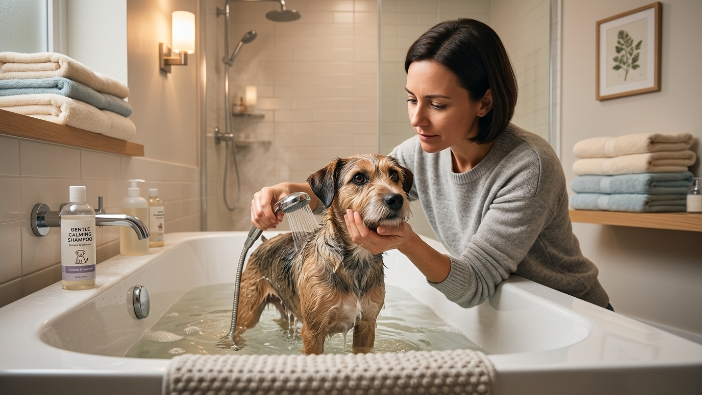
Before bringing your dog into the bathing area, gather all supplies nearby.
Essential items include:
- Dog shampoo
- Towels
- Brush
- Non-slip mat
- Cup or gentle sprayer
- Treats
Being organized prevents unnecessary delays that may increase anxiety.
Brush Before Bathing
Brushing removes loose fur, dirt, and tangles before water touches the coat. Matted fur can become harder to manage when wet.
This step also helps your dog relax through gentle touch.
Keep Water Away From the Face
Dogs often become fearful when water enters their ears, nose, or eyes.
Use a damp cloth to carefully clean the face instead of pouring water directly over the head.
Stay Patient During the Process
Never yell at or punish a frightened dog during bath time. Fear-based reactions should always be handled calmly.
Also Read More: Are Dogs’ Mouths Cleaner Than Humans? Debunking the Myth
If your dog becomes extremely stressed, pause briefly and allow them to settle before continuing.
What Is the 7-7-7 Rule for Dogs?
The 7-7-7 rule for dogs is often used to help dogs adjust to new experiences gradually and comfortably. While different trainers may explain it differently, it generally focuses on giving dogs time, patience, and positive exposure to build confidence.
For anxious dogs, this approach means:
- Introducing new situations slowly
- Repeating calm experiences regularly
- Rewarding positive behavior consistently
The same principle can work well during bath training. Instead of expecting immediate comfort, allow your dog to progress step by step.
How to Calm a Dog’s Nervous System
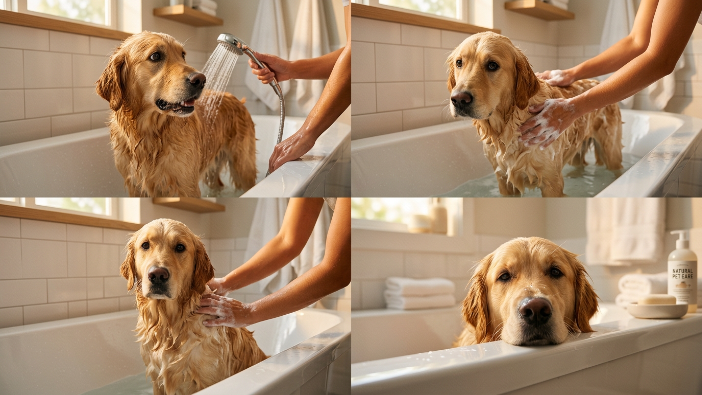
Helping calm your dog’s nervous system involves reducing stress triggers and creating a feeling of safety.
Use Gentle Touch and Reassurance
Slow petting and calm body language can lower anxiety levels. Dogs often relax when they feel protected and understood.
Maintain a Predictable Routine
Consistent feeding, walking, and grooming schedules help dogs feel secure because they know what to expect.
Avoid Overstimulation
Loud noises, rushing, or too many people around the bath area can overwhelm nervous dogs. Keep the environment quiet and peaceful.
Signs Your Dog Is Becoming Too Stressed
It is important to recognize when your dog needs a break.
Watch for signs such as:
- Heavy panting
- Trembling
- Trying to escape
- Excessive whining
- Aggressive behavior
- Tail tucked tightly
If these behaviors continue regularly, consider seeking help from a professional groomer or veterinarian.
Final Thoughts
Learning how to bathe a dog without fear or stress requires patience, kindness, and consistency. Every dog reacts differently to grooming, so it is important to move at a pace that makes your pet feel safe and comfortable.
By creating a calm environment, using natural anxiety-reducing techniques, and rewarding positive behavior, you can turn bath time into a more peaceful experience. Over time, many dogs become more confident and less fearful when handled gently and respectfully.