
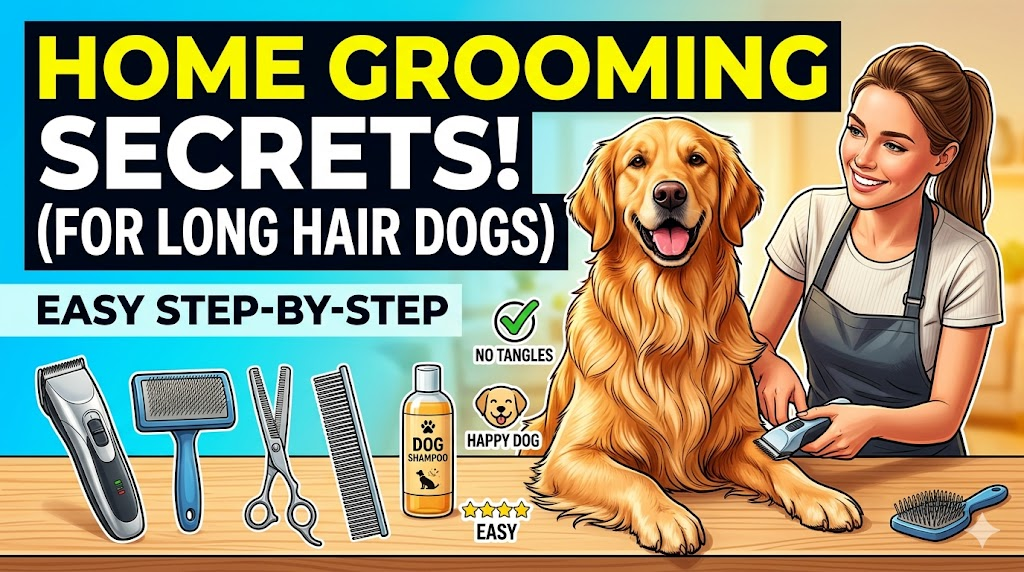
Caring for a long-haired dog is a rewarding experience, but keeping that beautiful coat tangle-free, clean, and healthy requires a consistent routine. Many pet parents feel intimidated by the thought of DIY styling, but learning dog grooming for beginners at home is entirely possible with the right patience and technique.
Whether you want to master how to cut dog hair at home with clippers or prefer learning how to cut dog hair without clippers, this ultimate guide covers everything you need to know to groom a small or large dog at home safely.
Phase 1: Essential Tools for Home Grooming
Before bringing your dog to the grooming area, gather your supplies. Having the correct tools makes the process faster, safer, and much less stressful for your pup.
- Slicker Brush & Steel Comb: Crucial for detangling long fur.
- Professional Pet Clippers: Look for quiet models with various guard combs if you want to learn how to groom a dog for beginners with clippers.
- Grooming Scissors & Thinning Shears: Essential for delicate areas like the face, paws, and sanitary regions.
- Dog-Safe Shampoo & Conditioner: Never use human products, as they disrupt a dog’s skin pH level.
- High-Velocity Dryer or Absorbent Towels: Long hair holds a massive amount of water.
Phase 2: The Pre-Wash Prep (Brushing & Detangling)
The absolute golden rule of long-haired dog grooming is: Never bathe a matted dog. Water acts like a sponge for mats, shrinking and tightening them against the skin, making them incredibly painful to remove later.
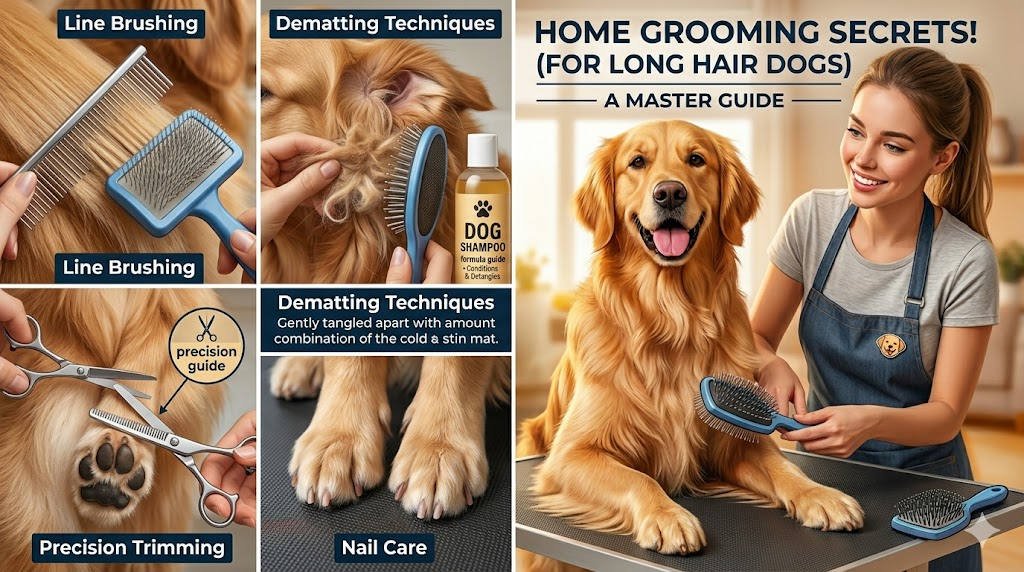
- Line Brushing: Separate the hair into sections. Brush from the skin outward using a slicker brush.
- The Comb Test: Run a metal comb completely through the coat from root to tip. If the comb catches, there is still a tangle that needs attention.
- Handling Mats: If you find a severe mat, use your fingers or the edge of a slicker brush to gently tease it apart. If it cannot be brushed out, you will need to learn how to cut dog hair with scissors specifically to remove stubborn knots safely.
Phase 3: The Bathing Process
Once the coat is entirely free of tangles, it is time for the bath.
- Wet Thoroughly: Long coats take time to saturate. Use lukewarm water and ensure you reach the undercoat.
- Shampoo Twice: The first wash removes surface dirt and oils. The second wash deeply cleanses the skin and fur.
- Apply Conditioner: This step is non-negotiable for long-haired breeds. Conditioner adds elasticity to the hair shafts, making future trimming dog hair at home much easier and preventing immediate re-matting.
- Dry Completely: Blow-dry the coat while brushing it simultaneously. The hair must be 100% dry before you attempt any styling or cutting.
Phase 4: Trimming and Haircutting Styles
Depending on your comfort level and tool availability, choose one of the two main cutting methods below.
Method A: Styling with Clippers
If you want a uniform, neat, and manageable length, learning how to groom a large dog at home with clippers is your best option.
[Attach Clipper Guard] ➔ [Turn on away from dog to check noise] ➔ [Clip in the direction of hair growth]
- Choose the Right Guard: Beginners should start with a longer guard (e.g., 1/2 inch or 3/4 inch) to avoid accidentally cutting too close to the skin.
- Follow the Grain: Always run the clippers in the direction that the hair grows naturally. Going against the grain can cause uneven patches and painful clipper burns.
- Keep it Cool: Check the clipper blade against your own wrist every few minutes. Blades heat up quickly and can easily burn a dog’s sensitive skin.
Also Read More About: How to Introduce Dogs to New Home Environments
Method B: Scissor-Only Styling
If your dog is terrified of noises or you want to learn how to cut dog hair without clippers to maintain a longer, flowing show-coat aesthetic, stick to manual shears.
- Use the Comb as a Shield: When trimming dog hair at home with scissors, never cut blindly into the fur. Instead, pull the hair up between your fingers or through a metal comb, and cut above the comb. This acts as a physical barrier protecting your dog’s skin.
- Thinning Shears for Mistakes: For beginners, straight scissors can leave harsh, choppy lines. Use thinning shears instead; they only cut a fraction of the hair per snip, blending the coat seamlessly and hiding any minor errors.
Phase 5: Trimming Delicate Areas
The face, paws, and sanitary areas require a steady hand and specific dog grooming tips for beginners.
| Area | Tool Preference | Expert Beginner Tip |
| Paws & Pads | Small Clippers or Safety Scissors | Clear out the fur growing between the paw pads to stop your dog from slipping on smooth floors. |
| The Face | Round-tip Safety Scissors | Rest your hand gently on the dog’s chin to stabilize their head, and always point the blades away from the eyes. |
| Sanitary Zone | Low-number Clipper Blade or Scissors | Trim the fur around the base of the tail and groin area short to keep daily bathroom trips clean and hygienic. |
Pro Dog Grooming Tips for Beginners
- Take Frequent Breaks: Grooming a long-haired dog is hard work for both of you. If your dog becomes restless or stressed, stop the session, offer high-value treats, and resume later.
- Make it a Positive Experience: Keep a jar of peanut butter nearby. Spreading a little on a washable surface can keep your pup happily distracted while you focus on trimming.
- Prioritize Safety Over Perfection: Your dog does not care if their haircut looks slightly asymmetrical. Focus on keeping them safe, clean, and comfortable rather than making them look picture-perfect on your first attempt.