
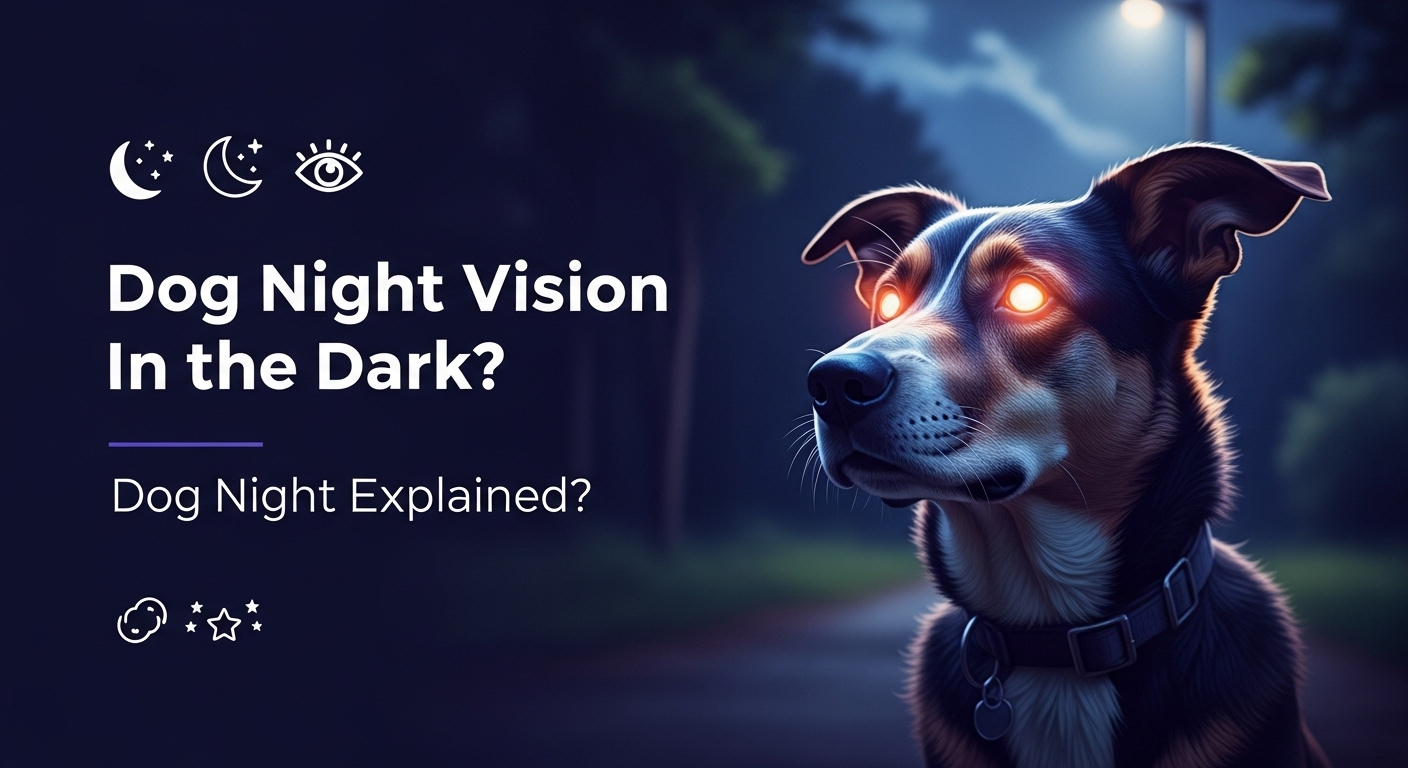
Have you ever wondered whether your dog can see in the dark? Many pet owners are curious about dog vision at night, especially when their furry friends navigate rooms, backyards, or walks after sunset. Unlike humans, dogs have evolved to excel in low-light conditions, but there are limits to their night vision. Understanding how dogs see, including their color perception and night vision abilities, can help you keep them safe and healthy, and explain why your dog sometimes reacts mysteriously to things you can’t see.
If you’ve asked yourself, “do dogs have night vision?” or noticed your dog’s eyes glowing in dim light, this guide will explain everything you need to know about canine vision, night sight, and eye health.
🐾 How Dogs See the World
Dogs don’t see the world exactly like humans. Their eyes are adapted to detect movement and shapes rather than a full spectrum of colors.
Can Dogs See Color?
Dogs are not completely colorblind, but their color vision is limited. They primarily see:
- Blue and yellow shades
- Limited reds and greens, which appear more like gray or brown
This means while your dog can distinguish some colors, bright reds and greens may look dull. Their vision is optimized for contrast and movement, which is useful for hunting and detecting prey in low light.
🌙 Do Dogs Have Night Vision?
Yes, dogs have enhanced night vision compared to humans. This is because of several adaptations:
- Tapetum Lucidum – A reflective layer behind the retina that bounces light back, giving dogs better low-light vision and causing their eyes to glow in the dark.
- Rod-dominated retina – Dogs have more rods than cones, which makes them better at detecting movement and shapes in dim light.
- Wide field of view – Their eye placement allows for a larger peripheral vision, helpful for seeing in the dark.
While dogs can see better in low light than humans, they cannot see in complete darkness. They rely on moonlight, streetlights, or indoor lighting to navigate safely.
🐶 Dog Night Vision vs. Human
- Dogs: Excellent in dim light, can detect movement from far distances, rely on reflective tapetum lucidium.
- Humans: Better in bright light, distinguish a wider range of colors, but struggle in low-light conditions.
For example, a dog can spot a moving object at night that a human may completely miss. However, their sharpness of vision is lower, so details are not as clear.
👁️ Common Vision Concerns at Night
Even though dogs are good at seeing in low light, they can experience vision problems such as:
- Cataracts – Clouding of the lens affecting night vision.
- Glaucoma – Increased eye pressure that can reduce light perception.
- Retinal degeneration – Loss of night vision over time, common in older dogs.
Regular vet check-ups and eye exams can help detect and treat these conditions early.
🐾 Can Dogs See Ghosts?
Many myths suggest dogs can see ghosts, spirits, or invisible entities. Scientifically, this isn’t proven. Often, dogs react to subtle noises, light reflections, or movements that humans cannot detect, which may explain their “ghostly reactions.”
📏 How Far Can Dogs See?
Dogs’ vision range varies by breed and eye structure. Generally:
- Dogs can see farther in dim light than humans, but sharp detail is limited.
- Peripheral vision is wider, helping them notice movements from the sides.
📝 Tips to Help Your Dog Navigate at Night
- Provide ambient lighting – Dim lights or night-lights indoors help your dog move safely.
- Use reflective collars – Useful for night walks.
- Keep pathways clear – Reduce obstacles in dim areas.
- Regular vet check-ups – Detect early vision issues.
Check Here: Why Do Dogs Sleep With Their Bum Facing You?
🔍 Final Thoughts
Dogs have impressive night vision and movement detection, though they don’t see colors the way humans do. Their rod-rich retina and reflective tapetum lucidum give them an edge in low light, but complete darkness is still a challenge. Understanding how dogs see can help you ensure their safety and comfort, especially during night walks or indoor navigation.
By paying attention to eye health, lighting, and nighttime hazards, you can keep your dog confident, safe, and happy—even after the sun goes down.