
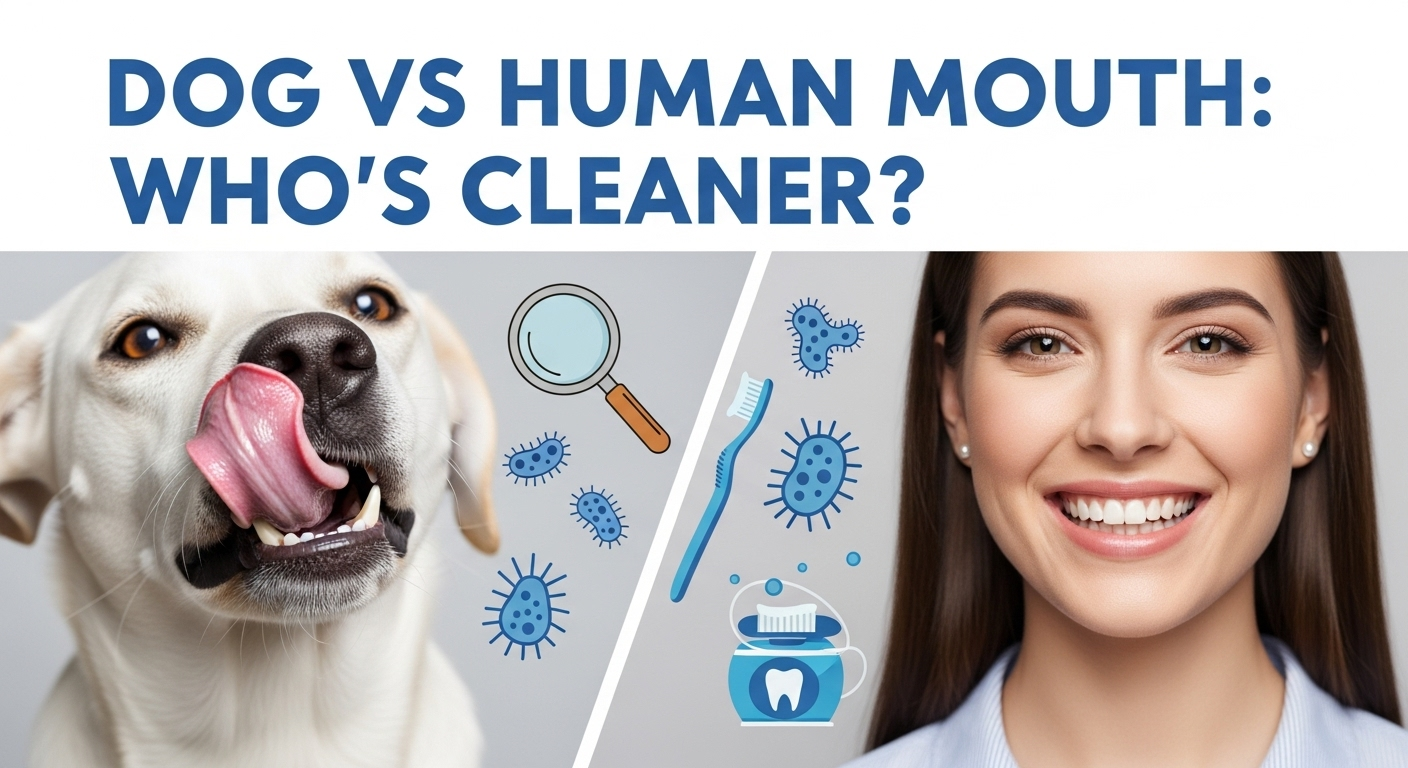
Have you ever heard someone say that dogs’ mouths are cleaner than humans’? It’s a common belief among pet owners and animal lovers, but is it really true? Many people are curious whether dog saliva kills bacteria, if dogs’ mouths self-clean, or how their oral hygiene compares to ours. Understanding the truth can help you make better choices about dog care, hygiene, and safe interactions with your pet.
If you’ve been wondering, “are dogs’ mouths better than humans’?” or “does dog saliva act like mouthwash?”, this guide will explain everything you need to know about canine oral health versus human oral health.
🦷 Understanding Dog Mouths
Dogs’ mouths are full of bacteria, just like human mouths. However, the types of bacteria are different. Dogs carry microbes adapted to their diet and lifestyle, while humans have bacteria suited for our food and habits.
Does Dog Saliva Kill Bacteria?
While dog saliva contains enzymes that help break down food and protect teeth, it is not a sterile or antibacterial solution. Some studies show that dog saliva has mild antibacterial properties, but it cannot replace proper oral hygiene.
Example: Dogs naturally lick their teeth and gums to clean off leftover food, but this does not eliminate harmful bacteria that can cause infections or bad breath.
🐶 Dog Mouth vs Human Mouth
| Feature | Dog Mouth | Human Mouth |
|---|---|---|
| Bacteria Variety | Different species, adapted to raw meat and scavenging | Variety suited to cooked foods, sugar, and processed diets |
| Self-Cleaning | Licks food residue and gums | Requires brushing and mouthwash for hygiene |
| Disease Risk | Can transmit zoonotic bacteria | Can transmit oral and systemic diseases |
| Saliva Function | Digestive enzyme, minor antibacterial | Digestive enzyme, strong antibacterial |
From this comparison, it’s clear that dogs’ mouths are not cleaner than humans’. They are simply different. Both require care to prevent disease and maintain health.
🧼 How Dogs Clean Their Mouths
Dogs clean their mouths naturally by:
- Licking – Removes some food particles.
- Chewing – Toys, bones, and dental chews help scrape plaque.
- Drinking Water – Flushes debris and food residue.
While these methods help maintain oral hygiene, they are not foolproof. Dogs can still develop gum disease, tooth decay, and bad breath if not cared for properly.
Read About: My Dog Is Limping but Shows No Sign of Pain
🐾 Human vs Dog Oral Hygiene Tips
For Dogs:
- Brush teeth regularly with vet-approved toothpaste.
- Provide dental chews and toys to reduce plaque buildup.
- Schedule routine vet dental check-ups.
- Monitor for bad breath, tartar, or red gums, which indicate infection.
For Humans:
- Brush teeth twice a day with fluoride toothpaste.
- Use mouthwash to kill bacteria.
- Floss daily to remove hidden plaque.
- Visit a dentist every 6 months.
Even though dogs lick and chew, human oral hygiene is more thorough and effective.
⚠️ Health Risks of Dog Kisses
Many people wonder if it’s safe to let dogs lick their faces. While the occasional lick is usually harmless, there are risks:
- Dogs can carry bacteria like Salmonella or Pasteurella.
- Those with weakened immune systems should avoid direct contact.
- Always wash hands and face after playful licking sessions.
🔍 Final Thoughts
The myth that dogs’ mouths are cleaner than humans’ is not scientifically accurate. Dogs’ mouths are different, yes, but not inherently cleaner. Their saliva may offer mild antibacterial effects, but proper oral care for both dogs and humans is essential to prevent infections and maintain good health.
By understanding the differences between canine and human oral hygiene, you can enjoy close interactions with your pet while keeping both of you safe and healthy.