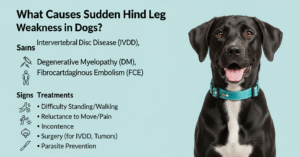

Have you ever noticed your dog suddenly struggling to walk or dragging their back legs out of nowhere? It’s heartbreaking to watch a once-active companion lose strength in their hind legs. Sudden hind leg weakness in dogs can happen for many reasons — some mild and treatable, others more serious and needing urgent veterinary attention.
Understanding what causes sudden hind leg weakness in dogs can help you respond quickly and get your furry friend the right care. In this article, we’ll explore the most common causes, warning signs to watch for, and what you can do to help your dog recover.
Why Is My Dog’s Hind Leg Weak?
There are several medical reasons why a dog’s back legs can suddenly become weak. Knowing these causes can help you communicate better with your vet and understand what to expect. Common conditions include:
1. Intervertebral Disc Disease (IVDD)
IVDD is a spinal problem where the discs between the vertebrae bulge or rupture, pressing on the spinal cord. This can cause sudden rear leg weakness in dogs, loss of coordination, or even paralysis. It’s most common in breeds like Dachshunds, Beagles, and Corgis.

Signs to watch: sudden wobbly gait, dragging back legs, pain when touched, or refusing to jump.
2. Degenerative Myelopathy
This is a progressive disease affecting the spinal cord, often seen in older dogs. Degenerative myelopathy causes slow but steady weakness in dogs’ hind legs. Over time, the back legs collapse as the nerves stop sending proper signals.
Important note: It’s painless, which can confuse owners because the dog appears healthy otherwise. There’s no cure, but physical therapy can help slow it down.
3. Osteoarthritis
Older dogs often develop osteoarthritis, which is chronic joint inflammation. It can cause stiffness, limping, and weakness in a dog’s back legs, especially after rest or exercise. While not sudden like trauma, it can suddenly worsen after strenuous activity.
Treatment: pain relief, weight management, joint supplements, and low-impact exercise can greatly improve comfort and mobility.
4. Neurological Disorders
Some neurological conditions can cause sudden weakness in a dog’s hind legs, such as spinal cord injuries, nerve inflammation, or infections affecting the brain and spinal cord.
My Dog Is Limping but Shows No Sign of Pain
Typical signs: loss of balance, stumbling, abnormal reflexes, or dragging legs. Prompt veterinary care is essential to prevent permanent damage.
5. Metabolic Disorders
Diseases like hypothyroidism or low blood sugar can weaken muscles and nerves, leading to leg weakness in dogs. These issues are often diagnosed through blood tests and are usually treatable with medication or dietary changes.
6. Injuries and Trauma
An accident, fall, or rough play can cause sudden weakness in dogs’ back legs by injuring muscles, ligaments, or bones. Even a minor injury can make a young dog’s back legs collapse or seem wobbly for a while.
Immediate steps: keep your dog still, limit movement, and visit a vet to rule out fractures or dislocations.
7. Tumors or Growths
Spinal or nerve tumors can press on nerves that control the back legs, causing hind leg weakness in dogs. Symptoms may appear gradually or suddenly if the tumor bleeds or shifts position. Early diagnosis can improve treatment success.

How Do You Know If a Dog Has a Weak Hind Leg?
Here are common signs that your dog may be developing hind leg problems:
- Stumbling or wobbling while walking
- Difficulty standing up or climbing stairs
- Dragging back paws or knuckling over
- Sitting down frequently during walks
- Loss of coordination or balance
- Sudden collapse of the rear legs
If your dog’s hind legs are suddenly weak, consider it an emergency — especially if it happens along with pain, crying, or inability to move.
What Can I Do If My Dog Has a Weak Hind Leg?
If your dog suddenly shows weakness in their hind legs, stay calm but act quickly:
- Limit movement – Stop your dog from walking or jumping to prevent further injury.
- Visit a veterinarian immediately – Only a vet can accurately diagnose the cause with physical exams, X-rays, or neurological tests.
- Follow the treatment plan – This may include medications, rest, physical therapy, or surgery in severe cases.
- Provide supportive care at home – Use non-slip mats, help with stairs, and offer comfortable bedding to reduce strain.
Final Thoughts
Seeing sudden hind leg weakness in dogs is scary, but knowing the possible causes helps you respond quickly. Whether it’s IVDD, degenerative myelopathy, osteoarthritis, injuries, or metabolic issues, timely veterinary care can make all the difference.
Your dog depends on you to notice changes early and get help. If you see your dog suddenly struggling to walk or dragging back legs, don’t wait—contact your vet. With early diagnosis, many dogs recover mobility and go back to living happy, active lives.